
Twin Loss and Sibling Grief: A journey through losing Isaac and Joey during Suicide Prevention Month

Some losses do not fit inside ordinary words. They change the calendar, the family table, the way a name sounds when someone says it out loud.
During Suicide Prevention Month, I think about my brothers, Isaac and Joey. I think about the weight of sibling grief. I think about twin loss, a grief with its own kind of silence, its own ache, its own daily reminders. Losing one sibling can rearrange a life. Losing two brothers asks the heart to keep learning how to survive.
This is not a neat story with a clean ending. Grief does not move in a straight line. It circles back. It softens, then knocks the breath out again. It becomes part of the journey, not because anyone chooses it, but because love remains after death.
Sibling grief can feel invisible
When a parent loses a child, people understand that the grief is enormous. When a spouse loses a partner, people recognize the life partnership that has been broken. But when someone loses a brother or sister, the depth of that loss can be overlooked.
Siblings are often our first witnesses. They remember the childhood version of us. They know the family jokes, the old arguments, the house we grew up in, the sounds of holidays, the stories no one else can tell the same way.
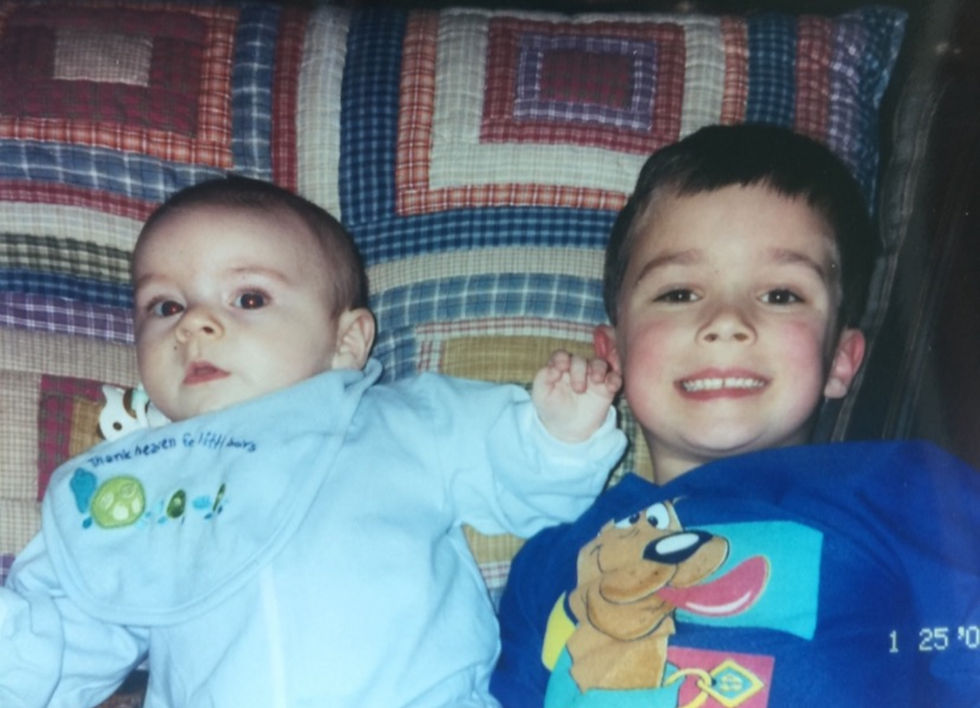
A brother is not just a person in the family photo. A brother can be:
A keeper of shared memories
A mirror of where we came from
A link to childhood
A protector, rival, friend, or all three
A person whose absence changes every family gathering
Losing Isaac and Joey means carrying grief in layers. One loss does not cancel out the other. Each brother had his own voice, his own place, his own way of being loved. That means each absence has its own shape too.
Sibling grief is heavy because siblings help hold our history. When they are gone, part of that history feels harder to reach.
Twin loss carries a bond that is hard to explain
Twin loss is often described as losing the person who was there from the beginning. For many twins, the bond starts before memory. It can feel like sharing a language without words, a rhythm, a presence that has always been nearby.
Not every twin relationship is the same. Some twins are best friends. Some are complicated. Some grow in different directions. But the connection often runs deep because it is tied to identity. People ask about “the twins.” They compare, connect, and remember them together.
When one twin dies, the surviving twin may face grief that reaches into the question of self.
Who am I without the person who shared my beginning?
That kind of grief can be lonely. Others may care deeply, yet still not understand the depth of the missing. Twin loss is not only the loss of a sibling. It can also feel like the loss of a lifelong reflection.
During Suicide Prevention Month, naming that pain matters. Naming it does not fix it, but it honors the truth. Twin grief deserves tenderness, patience, and room.
Suicide grief brings questions that do not always have answers
Grief after suicide can carry a painful mix of sadness, anger, love, confusion, guilt, and longing. The mind searches for answers. It replays conversations. It wonders what signs were missed, what words could have changed the outcome, what love could have done differently.
Those questions can be relentless.
But suicide is complex. It is rarely caused by one moment or one person. Mental health pain can be hidden. People who are suffering may mask it, minimize it, or believe they are protecting others by staying quiet.
That truth does not remove the ache. It does not stop the “what ifs” overnight. But it can help loosen the grip of blame.
For anyone carrying this kind of loss, the grief may come with extra burdens:
Feeling shocked by the suddenness
Wanting privacy while also needing support
Hearing unhelpful comments from people who do not understand
Feeling protective of the person’s memory
Struggling with guilt, even when the death was not your fault
Isaac and Joey were more than how they died. That sentence matters. They were brothers. They were loved. They had stories, laughter, habits, memories, and meaning. Suicide may be part of the grief story, but it is not the whole story of who they were.
If this topic feels close to home, support is available. In the United States, call or text 988 to reach the Suicide and Crisis Lifeline. If there is immediate danger, call 911 or go to the nearest emergency room.
Healing is a journey, not a deadline
People often talk about healing as if it means feeling better and moving on. But after losing brothers, healing may look quieter than that.
It may look like getting through one birthday. Saying their names without falling apart every time. Letting yourself cry in the car. Laughing at a memory and not feeling guilty for the laughter. Keeping a photo nearby. Lighting a candle. Taking a walk when the sadness feels too loud.
Grief changes over time, but it does not mean love fades. In many ways, grief is love still reaching.
There may be days when the loss of Isaac feels sharp. There may be days when Joey’s absence is the one that rises first. There may be days when both losses sit together, heavy and impossible to separate.
That is part of the journey.
Healing can include:
Talking with a grief counselor or therapist
Joining a support group for suicide loss or sibling loss
Writing letters to the person who died
Creating rituals on birthdays or anniversaries
Asking trusted people to listen without trying to fix the pain
Resting when grief affects the body
There is no correct pace. Some days survival is the work. Some days remembering is the work. Some days hope returns in small ways, and that counts too.
Remembering Isaac and Joey with honesty and love
Suicide Prevention Month is about awareness, but it is also about people. Real names. Real families. Real empty chairs. Real love that did not end.
Remembering Isaac and Joey means holding the full truth. The pain, yes. The questions, yes. But also the bond, the stories, the brotherhood, the moments that still matter.
Grief may always be part of the relationship now. That does not make the love any less real. If anything, it shows how deeply they mattered.
The journey through twin loss and sibling grief has no map. It asks for breath by breath courage. It asks for honesty. It asks for support. It asks families to speak the names of the people they miss, not only the way they died.
Isaac and Joey are remembered. They are loved. Their lives mattered.
And for anyone walking through a grief this heavy, the next step does not have to be big. Stay for the next breath. Reach for one safe person. Say the name. Light the candle. Let love and sorrow sit side by side. That is still a way forward.


Comments